19th Jan 2026
WELL in Practice: What We Learned by Achieving Certification of WorkLife Central
We’re proud to share that our office, WorkLife Central, has achieved WELL Building Standard certification.
We’ve been advocates of WELL for years. It’s a science-backed, globally recognised standard we can use to help clients shape workplaces where people feel and work their best – and we’ve seen the difference it can make when it’s applied properly.
Certifying WorkLife was our way of bringing that same benchmark home, so we’re not only guiding clients through the process, but living it day to day too.
Here’s what WELL looks like in a real working office – what the certification involved, what we changed at WorkLife, and how we’re now helping more clients take a practical route into it.
The WELL Standard: An Overview
WELL is a building standard focused on health and wellbeing. It looks at the day-to-day experience of a workplace and asks, “Is this environment actually supporting people?”
It’s structured around ten concepts – air, water, nourishment, light, movement, thermal comfort, sound, materials, mind and community – with clear conditions to meet, plus additional strategies you can choose depending on your goals.
If you’d like the full concept-by-concept breakdown (including example interventions and how scoring works), you can read our Essential Guide to the WELL Standard.
Our WELL Certification Process
Certification matters because workplaces evolve. Teams, routines and priorities change over time, and this process checks that the space is still supporting people in the way it should.
We formed a small internal group, including our WELL Accredited Practitioners, Rebecca and Caitlin. Using the WELL portal scorecard, we set priorities, introduced design and policy changes, submitted evidence for review, and completed performance testing as part of verification.
What changed at WorkLife
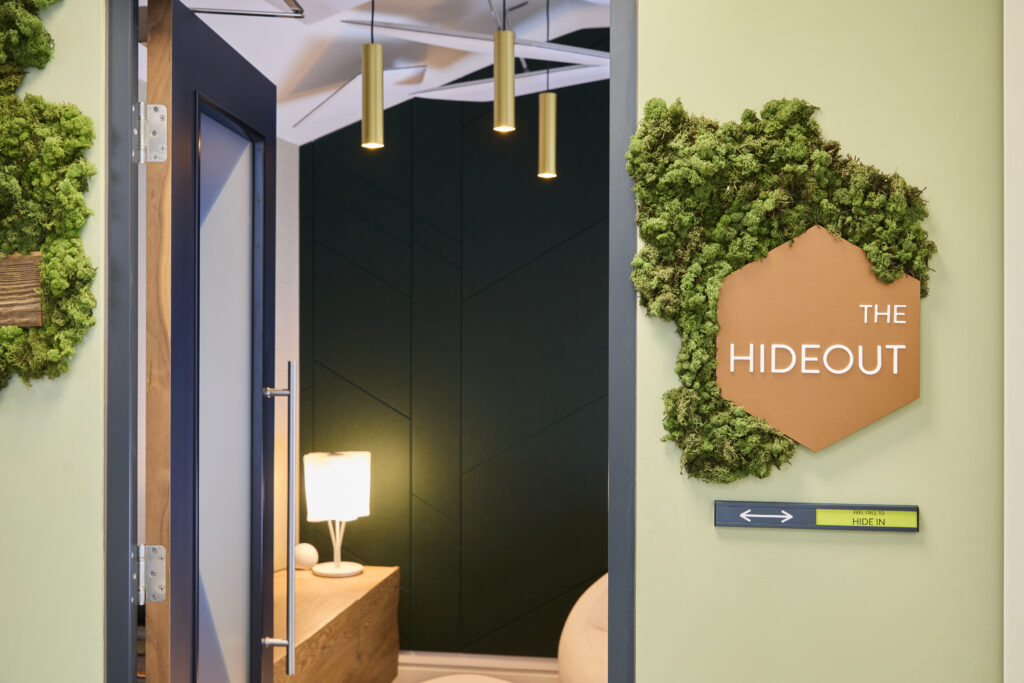
The Hideout
One of the most visible changes is the creation of our restorative room, The Hideout.
It’s designed for proper breaks at any point in the day. Because people decompress differently, the space is adjustable with blackout blinds, controllable lighting, and sound options depending on what someone needs at that moment.
We also introduced a simple policy alongside it: the room is available to everyone whenever they require it and we actively encourage its use including nap time if they need it.
Creating the room was only half of the job. The policy is what makes it usable. It removes the awkwardness, normalises breaks, and makes it clear that rest is supported with no questions asked.
“The Hideout has been a really great addition to WorkLife. You can set it up how you prefer and use the space for whatever you need during the day. Sometimes it’s just to get a bit of quiet between calls, other times it’s for a quick nap. Because it’s encouraged, you don’t feel any pressure about taking a break – it’s just there to help you reset.”
Lighting that feels easier to work under
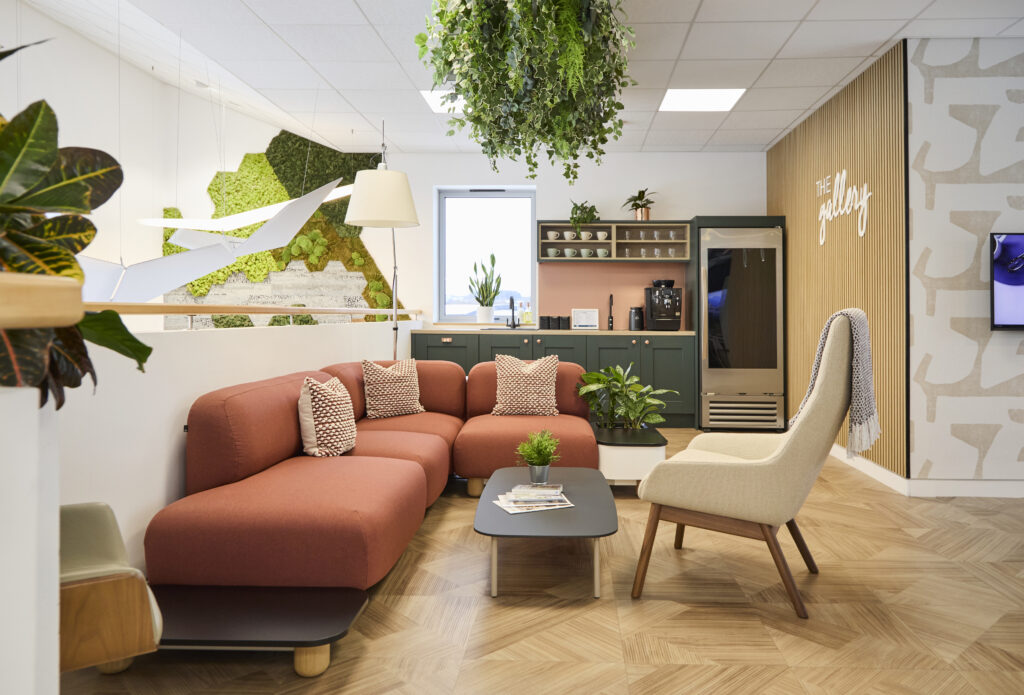
We upgraded our lighting to low-flicker, low-glare LED panels. Glare and flicker can lead to fatigue, especially in busy work zones where people are on screens for long stretches. Improving that baseline is part of making the office feel calmer and easier to work in.
Movement built into the week
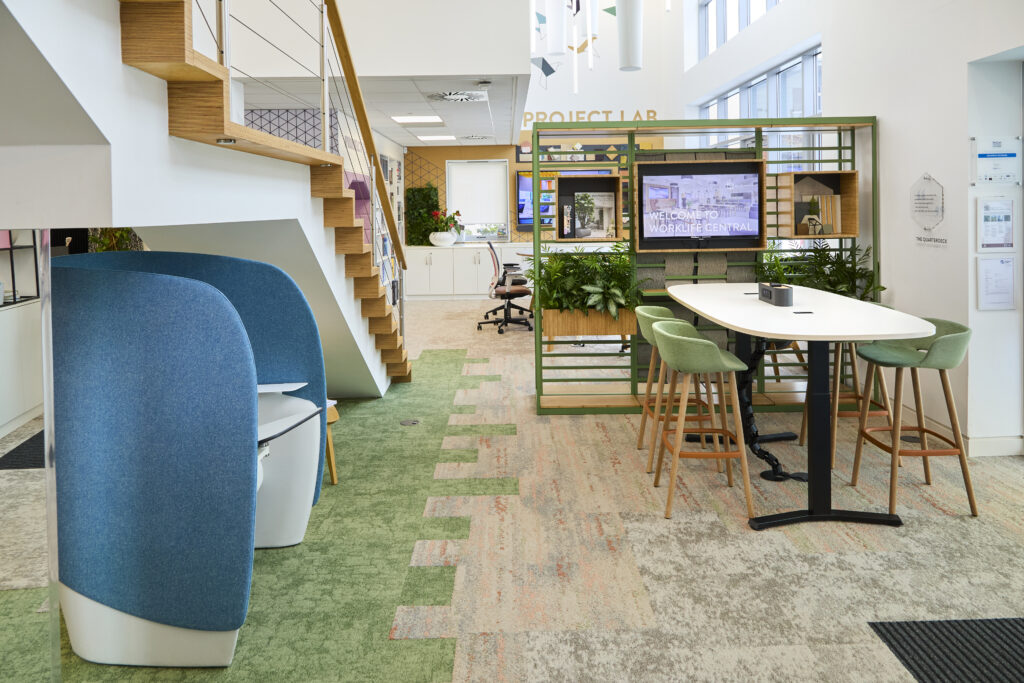
We introduced Thursday lunchtime fitness classes in the Loft, our flexible meeting and workshop space, as part of our routine. It gives people a reason to step away from screens, a chance to exercise in a proven beneficial manner, and come back feeling more switched on – and because it’s shared, it also supports connection across the team.
“Thursday fitness has become a really good part of our routine. It gets you away from your desk, helps you stay active, and you definitely feel better for it afterwards. It’s also just a nice chance to spend time with the team in a different way – it gives the day a bit of an energy boost towards the end of the week. It’s also been good for relationships across the team. You end up mixing with people you don’t always work directly with, which makes day-to-day collaboration feel easier.”
How to approach WELL in your workplace
WELL doesn’t have to be all-or-nothing, and it doesn’t always require starting from scratch. There are routes that fit different buildings, budgets and timelines.
Some organisations go for full WELL Certification, covering all ten concepts. Others start with one of the WELL Ratings – smaller, more focused ways to make progress without taking on the full programme straight away. There are currently three mini ratings, Health-Safety, Performance, and Equity, with being introduced over the next year.
We’ve been supporting clients with the WELL Equity Rating in particular. It’s focused on the day-to-day experience of inclusion and belonging, and it looks at how the workplace is designed, how it runs, and the policies that support it. It’s also often achievable in around 3–6 months, with an annual renewal that helps keep the momentum going.
Why choose WELL
WELL is worth considering because it ties decisions to outcomes people feel every day. In practice, clients tend to choose it for a few reasons:
- Retention and engagement: When a workplace feels comfortable and supportive, people are more likely to stay and feel proud of where they work.
- Everyday performance: Small improvements to comfort, light, air and acoustics can make a difference to focus and energy across the week.
- Clarity and accountability: WELL turns wellbeing goals into actions you can evidence and maintain, with verification built into the process.
- Health and absence: Reducing friction in the work environment can help people avoid the “push-through” effect that often leads to burnout or absenteeism.
- Return on investment. Investment in the work environment can pay back through increased activity, productivity, reduced absence, and stronger attraction over time.
How Blueprint can help
With two WELL Accredited Practitioners in our team, we can support you from early planning through to submission, review and verification.
We work closely with you to understand how your people actually use the space, identify where the workplace is helping (or getting in the way), and translate the guidance into changes that people can adopt.
We’ll help you decide what to prioritise first, what can come next, and what evidence is needed along the way. From there, we’ll set a pace that fits with your team, with clear steps you can follow through on.
Want to explore WELL for your workplace?
If you’re considering WELL certification or ratings, we can start with an informal conversation about your space, your priorities, and what “better” should feel like for your people.
Please get in touch to book a chat, or arrange a tour of WorkLife to see for yourself.